
Non-prime lender Fair For You used Infact's Affordability Engine to reduce affordability-based declines and increase approval rates, without compromising on risk.
As part of continued new lending decisioning improvements, Fair For You was looking for a way to reduce the number of affordability-based declines by replacing and improving on ONS-based expenditure estimates. They needed more accurate affordability assessments to responsibly extend credit to a broader customer base while maintaining their risk appetite.
The team wanted three things:
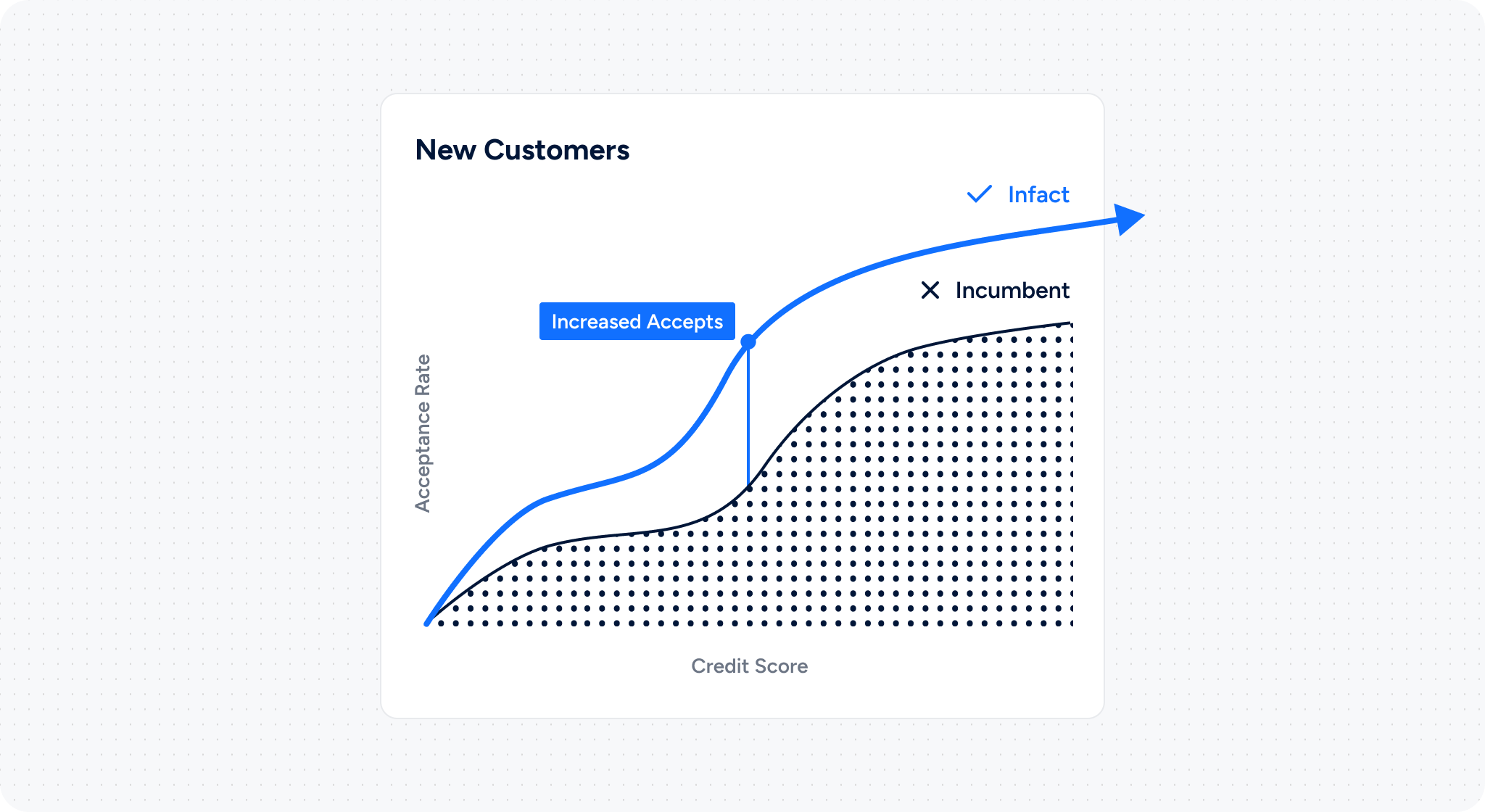



Infact's Affordability Engine is a cutting-edge solution that enables lenders to make faster, more accurate lending decisions. Using advanced data science and machine learning, it provides granular, individual-level expenditure predictions to enhance existing credit risk models. It was integrated into Fair For You's existing decisioning process.
The Affordability Engine uses applicant-declared income and other relevant data points to personalise expenditure estimations for each applicant. Coverage is comprehensive, with predictions for 100% of applicants.
The Affordability Engine was integrated seamlessly with Fair For You's existing credit risk models, following a short period of dual processing. This allowed Fair For You to validate performance against the incumbent model before switching fully.
The solution supported Fair For You in meeting regulatory requirements for affordability assessments, a critical consideration in the non-prime sector.
Fair For You showed that granular, individual-level expenditure predictions can materially reduce affordability-based declines and increase approval rates, without compromising on risk. Despite the increase in approvals, the default rate remained slightly lower than the incumbent model, adding an additional layer of insight to help protect vulnerable customers from over-extending.
For Fair For You's customers, that means increased access to credit and faster decisions, with responsible lending decisions that better reflect their individual circumstances.



.svg)
.svg)


%201.svg)


