
A major UK personal lender tested Infact's Affordability Engine against their incumbent solution in a high-volume, broker-led marketplace journey. The retro showed a potential 4.23% uplift in originations, worth £3.884M in additional lending and £2.071M in additional interest revenue.
A major UK personal lender wanted to improve affordability assessments in their high-volume, broker-led marketplace journey. Their reliance on generic ONS data for expenditure modelling and incomplete CATO-based income verification was causing excessive affordability-based declines and manual referrals.
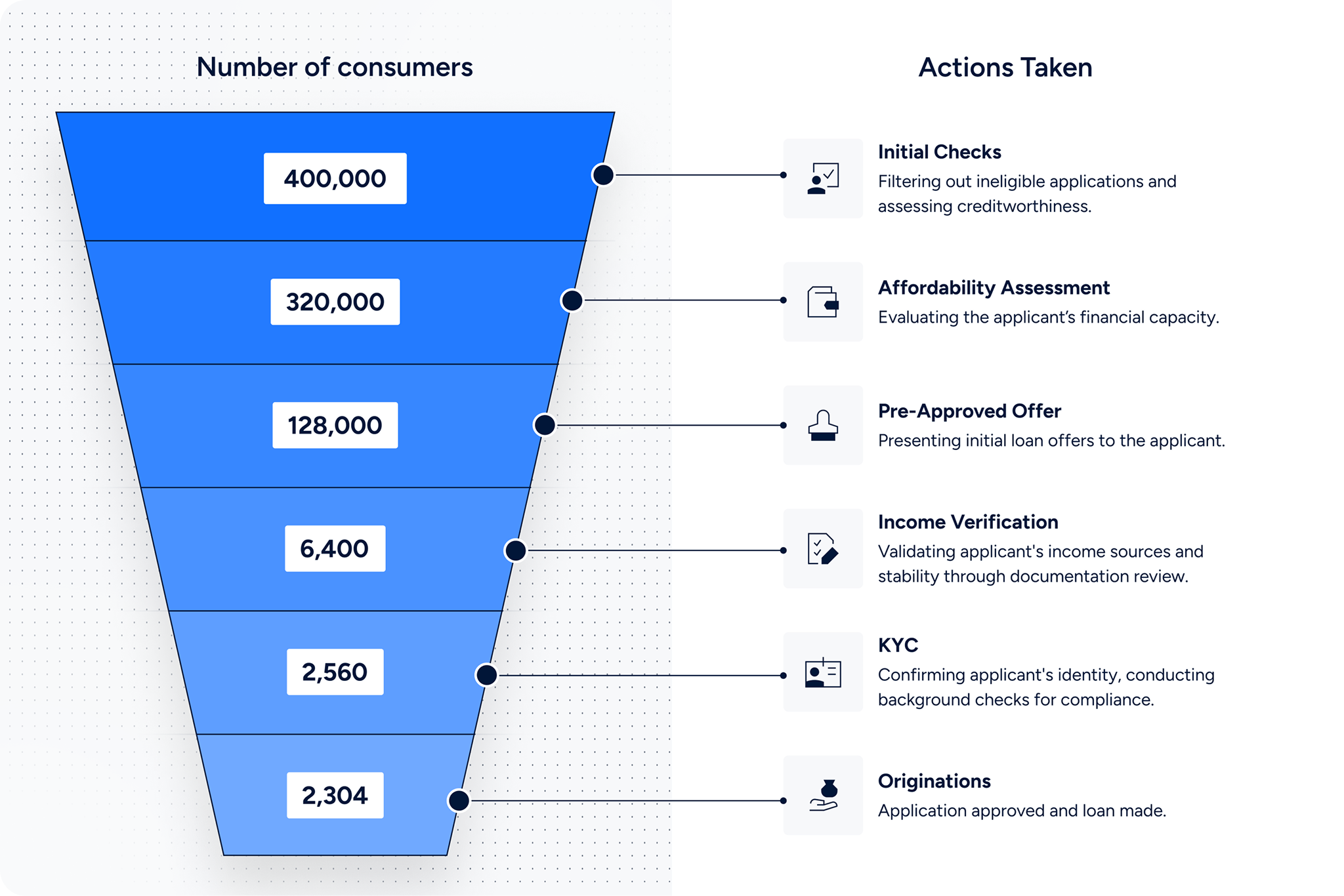
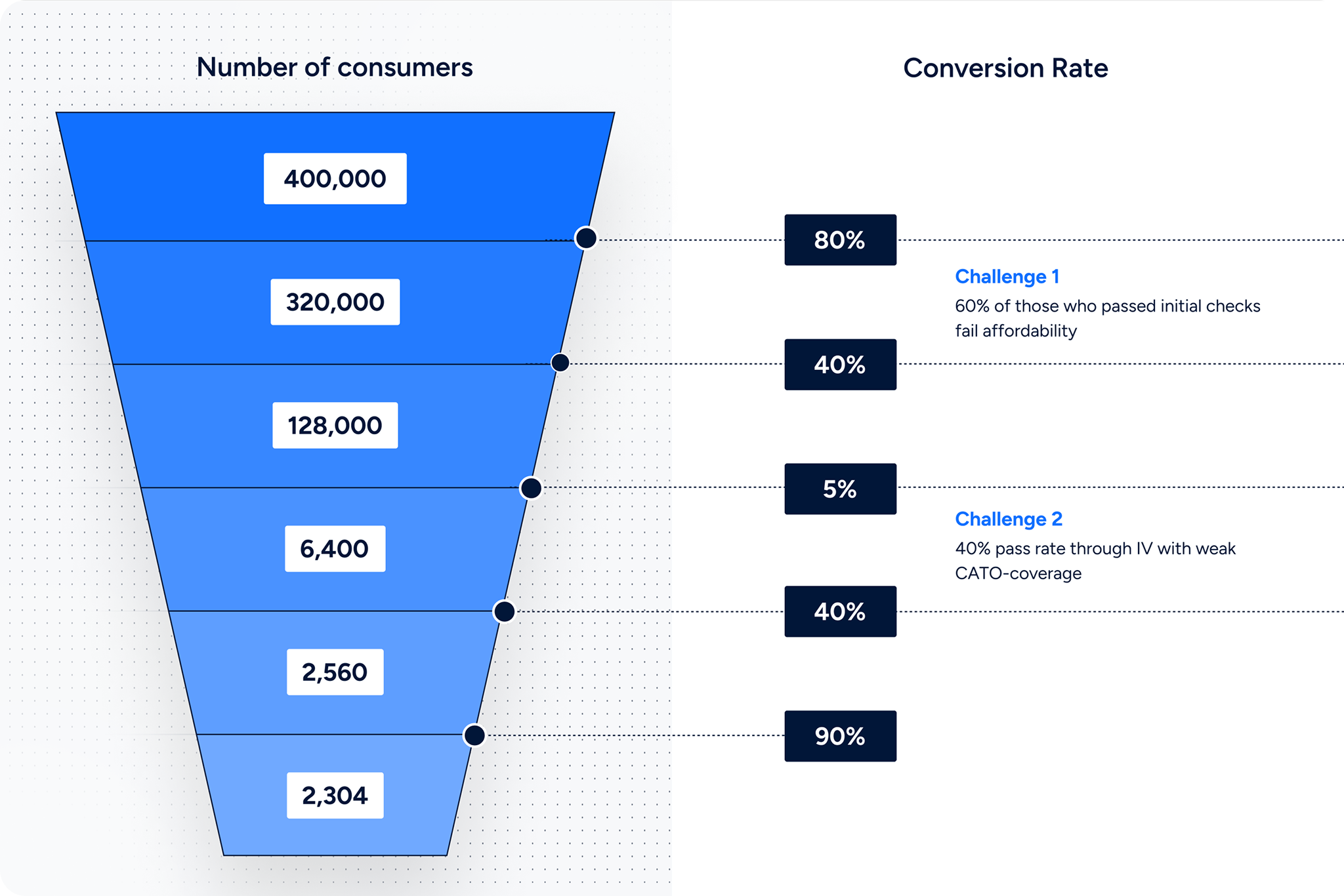
The lender did not have confidence in the ONS data used in their expenditure models, and their existing model was causing more affordability-based declines than they felt was reasonable based on economic research. This was a frustration as it meant the lender was declining applicants who had good creditworthiness and excluding people based on poor availability of affordability data to drive a responsible lending strategy.
In addition to this, they had a large percentage of applicants they could not verify income for using their CATO-based models, resulting in larger manual referrals.
Objective: To achieve at least a 1% uplift in the affordability and income verification pass rates.
Infact's Affordability Engine was tested against the incumbent solution to assess the potential impact on the lender's pre-approval decisioning process, and the net reduction in affordability-based declines by:
The solution offered frictionless delivery of personalised income and expenditure metrics on 100% of applicants, giving the lender more nuanced affordability data and a higher degree of configurability and control over their model inputs.
The lender also benefits from continuous model refinement ensuring output accurately reflects the current economic environment, while offering full explainability that improves transparency for customers, auditors, and regulators. Additionally, the solution reduces the cost per acquisition of new customers by driving down OPEX costs.
After the retro, analysis showed that the following uplift could be expected by implementing Infact's Affordability Engine:
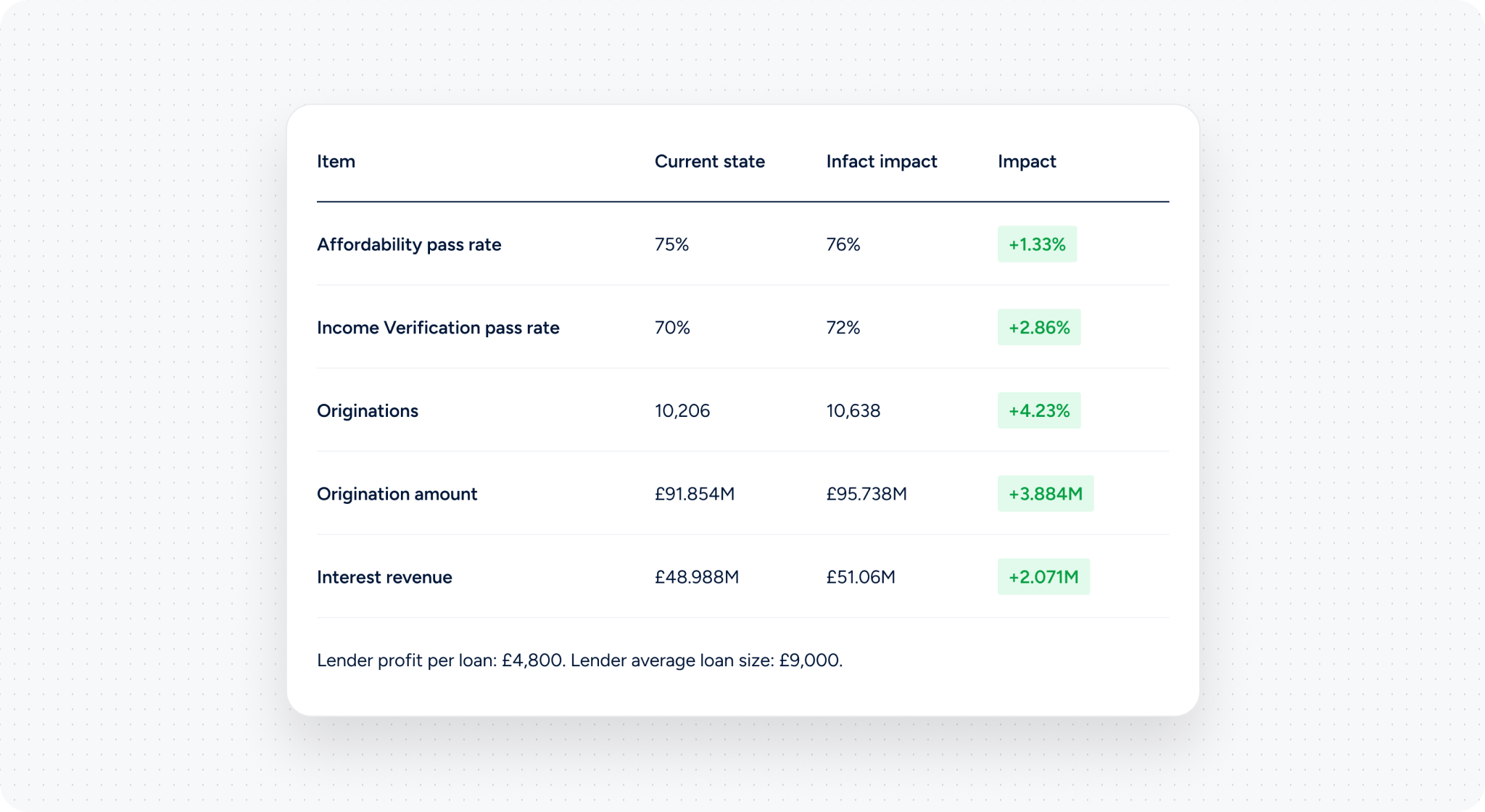
Both objectives on the affordability and income verification pass rates were met, and the improved pass-through drove a 4.23% increase in originations and £2.071M in additional interest revenue.
Beyond the quantitative uplift, the Affordability Engine reduces the lender's reliance on an increasingly unreliable data source. It gives them greater confidence in responsible lending decisions through transparent, explainable expenditure insights, based on affordability information that is accurate, relevant, and refreshed in real time.
It also improves access to competitive rates for non-average customers previously disadvantaged by public data, and delivers faster decisions with reduced friction in the customer journey from application to approval.



.svg)
.svg)


%201.svg)


